
Why the Best Room Beats the Biggest Room: Curated Executive Access in APAC
Updated: Aug 3

Curated Executive Access in APAC
Every CIO and CMO in Asia Pacific gets the same invitation logic thrown at them weekly: register for a conference with a thousand attendees, a sprawling expo floor, and a forty-five-minute keynote slot squeezed between two sponsor pitches. The promise is reach. The reality, more often than not, is noise.
rockbird media built its techX and dataAIX events inside the Xchange Series on a different bet: that for senior decision-makers, the size of the room is inversely related to the value of the conversation. Since 2016, that bet has shaped how we design summits across Singapore, Malaysia, the Philippines, and the wider region, and it has become the operating principle behind every closed-door format we run.
Here is what that principle looks like in practice, and why it holds a lesson for any leader deciding how to spend a limited number of hours building real relationships with peers.
The Crowd Is Not the Audience
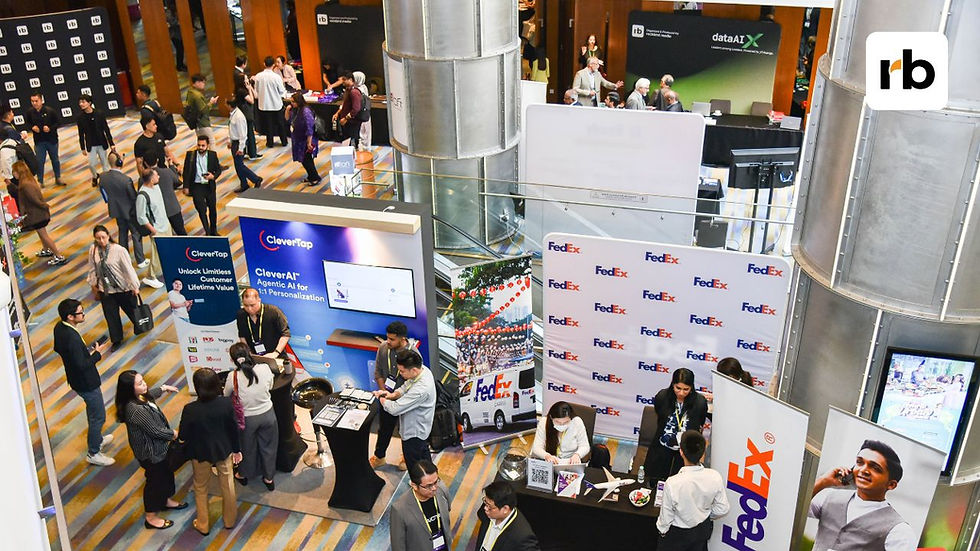
A 1,000-person summit looks impressive on a recap slide. But a CIO sitting in that room is competing for attention against 999 other people, most of whom are not in a position to make a decision that affects the CIO's own roadmap. The headline speaker delivers value to the room as a whole; almost nobody in the room gets to act on it directly, because there is no structured way to turn a keynote into a conversation.
The Xchange Series, through events like dataAIX and techX, takes the opposite approach: cap the room, fill it exclusively with C-level and senior technology leaders, and design every session around the discussion, not the stage. Director-level connections and high-level networking in a trust-driven environment are not a marketing line for us; they are the actual product specification for the room.
What Curation Actually Buys You
When every person in the room has already been screened for seniority, relevance, and decision authority, three things change at once:
Candor goes up. Peers speak more openly about budget pressure, vendor disappointments, and stalled projects when the room is closed-door and everyone present has equivalent skin in the game.
Time-to-value compresses. A roundtable of fifteen relevant leaders can cover more ground in ninety minutes than a keynote hall covers in a day, because the discussion is shaped by the people who actually need the answer.
Follow-up becomes possible. Forty business cards collected at a booth rarely turn into a meeting. Three conversations with the right counterparts, started in a small room, regularly do.

The Takeaway for Your Own Organization
This is not really an events insight. It is a resource-allocation insight, and it applies just as directly inside your own company as it does to your conference calendar.
As a leader, you face the same choice constantly: broadcast to everyone, or convene the right few. Town halls, all-hands updates, and mass emails have their place, but the decisions that actually move a strategy forward, an architecture choice, a vendor renegotiation, a reorg, rarely get resolved in a room of two hundred. They get resolved when the right eight people, with real authority and real stakes, sit down together with no audience to perform for.
Three questions worth asking before your next major internal session or external engagement:
Who in this room can actually act on what we decide? If the honest answer is “few of them,” the format is wrong for the goal.
Is the environment built for candor or for optics? Large, public, recorded settings push people toward safe answers. Closed, trust-based settings surface the real ones.
Are we optimizing for reach or for outcome? Reach is a vanity metric until it converts. Outcome is the only metric that funds next year's budget.
The leaders who get the most out of the Xchange Series tend to be the ones who already apply this logic internally, the ones who protect their own calendars from low-value crowds the same way they expect an event organizer to protect the room.

Where This Plays Out Next
Across Singapore, Malaysia, the Philippines, Vietnam, and Thailand, the Xchange Series keeps testing this principle against new categories, dataAIX, retailX, lastmileX, and beyond, because the format travels well across industries even as the subject matter changes. The constant is the room: senior, relevant, and small enough that every person in it matters to every other person in it.
If you are weighing where to spend your next quarter's worth of networking hours, the question is not which event has the bigger name on the banner. It is which room has the fewest seats filled by people who cannot help you, and the most filled by people who can. That is the logic behind curated executive access in APAC — events designed not around headcount, but around the quality of every conversation in the room.


Comments